


SAFE FOOD. HEALTHY FAMILIES. LONG LIFE.
OUR COMPANY
First and foremost, we are here to serve you. As global trading specialists in Asia and the Pacific Rim, North and South America, and Europe, we offer expertise and experience in trading frozen, canned, freeze-dried and shelf-stable fruits and vegetables. Our goal is simple: bring buyer and seller together and provide extraordinary service and competitive pricing so that each transaction is worry-free and profitable for both parties. One-sided profits do not make good business and we are looking for long and lasting relationships with our customers and suppliers.
For over forty years, Noon International has actively traded in food and food-related products worldwide. Anyone wanting to establish long-term and profitable trade with China for example, must spend an inordinate amount of time building such trusted relationships known as “guanxi.” Our relationships provide a network of suppliers and customers for safe, healthy food products in bulk, retail and food service applications that will meet FSMA requirements. We consider the value of this “priceless” and invite you to join us now and become part of this valuable safe food network serving buyers and sellers alike in the food industry.
Over the years, the food industry has matured and buyers and sellers alike now have easy access to world markets. The power of technology and the Internet has made the world a much smaller place and general manufacturing processes and company infrastructures are visible to all. In this “transparent” environment, success belongs to the industry leaders (both large and small) throughout the world whose company philosophies support their core business.
Our Business Strategy Is Your Competitive Edge
Trading in the healthy, safe food business is a two-way process that requires us to act as both buyer and seller depending on the particular transaction. For example, if you want to export your products to the U.S. market and have no contacts or experience here, our team of import experts will provide extensive marketing, sales, support and service minimizing the cost and time spent by your company. This is a critical component when it comes to meeting the new requirements of the FSVP (Foreign Supplier Verification Program). In order to meet the new FSMA guidelines, whoever you sell to in the USA is responsible for your verification as a foreign supplier. We will take care of your verification.
On the other side, if you’re a North American producer and want to export your food products to South and Central America, Asia and South East Asia, Australia, Europe or New Zealand, our export division is your main contact. Utilizing the experience of experts saves your company time and money and allows access to our worldwide database of approved food buyers and sellers. Understanding your business and marketing needs is essential – including logistics and shipping, product procurement, documentation, regulatory and label requirements, packaging design, consulting services, knowledge in all areas of food safety with particular emphasis on the new FSMA guidelines.
This is a time of social responsibility, when all parties involved in the food chain must be accountable for their actions and products. FSMA has and will continue to rapidly change our industry and those who are not compliant will fail. At Noon International, we are dedicated to assisting our global suppliers, importers and exporters to meet the latest FSMA requirements for seamless international transactions. Customers today expect safe and healthy food and Noon International delivers this promise through our worldwide network of trustworthy and quality partners.
As one of America’s oldest food importers and exporters serving buyers and sellers of the food industry worldwide since 1976, we are dedicated to improving and extending the lives of people throughout the world by providing safe and healthy food – a vision that is shared by Noon’s owners, shareholders, all employees and our local and global business partners. Please partner with us today!
OUR SERVICES

Sales & Sourcing – Knowing How and When to Buy
- We offer spot business or contractual pricing. Knowing when to buy allows us to secure top-quality products at best pricing levels.
- Evaluation of your product for intended market.
- Screening of potential customers and distributors to handle your products.
- Assistance in establishing competitive pricing in target markets.
- Negotiate workable terms and pricing and secure orders.
- Source hundreds of competitively priced products for you through our extensive approved network of safe food suppliers.
- Design your label and packaging according to foreign requirements with package translation and specialized packaging sizes and requirements.
- Arrange product testing and pre-shipment verification to meet FSMA requirements.

Marketing
- Expand your customer base through private-label branding. For ideas on how to expand your product line and increase customer loyalty, read our report on Private Label Branding at www.noonfoodnetwork.com/Marketing.
- Cultural product adaptation including flavor profiling for easy market access.
- Online and offline marketing strategies.
- Specialized product request – we are continually looking for and finding new products for niche markets including organic, sustainable and super-healthy foods. \
- Full communication in your native language including English, Japanese, Mandarin and Spanish.

Market Surveillance & Intelligence/FSMA Compliance
- We demystify the FSMA (Food Safety Modernization Act) for importers and exporters.
- How to bring your company and plants into FSMA compliance.
- Reports on latest government and country regulations.
- FDA Updates that pertain to this industry.
- Weekly Global Crop Reports – go to www.noonfoodnetwork.com/FoodReport.
- Growing Cycle Charts (U.S. & Worldwide).
- Traceability, Pesticide Residue Analysis, Shelf Life, Pathogens.
- Quality Control Expertise: sanitation, plant inspections, source reliability reports, micro analysis, foreign material and product specifications.

Logistics & Shipping
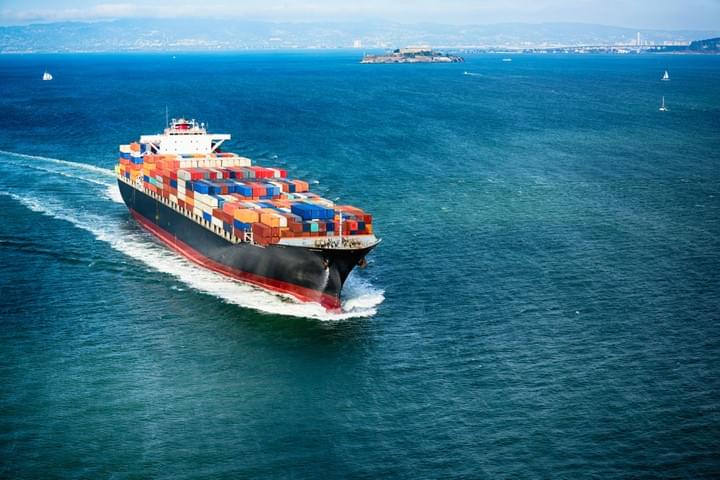
- Arrange all inland rail or truck transport, ocean freight and delivery to point of export or final destination with appropriate documentation handling plan.
- Documentation checklist will be provided to enable you to review all requirements carefully prior to shipment so process of import/export moves smoothly.
- Introduce and utilize our reliable and long-term customs broker network for import/export procedures.
- Latest updates on government regulations, import/export requirements and restrictions, product certification and regulatory controls by country.
- Storage and distribution services.

Consulting Services
- Our newest division includes one-on-one consultation with food buyers and sellers throughout the world who want access to the North American market or wish to source products from North America. The Food Service Modernization Act (FSMA) has dramatically changed the requirements for both importers and exporters alike and compliance with these regulations is now mandatory. If you currently export products to the USA or you are an importer of record, we can assist you with compliance services that can be integrated in accordance with your company’s requirements.
Products
Check with Sales for Organic and Conventional availability.
FOOD SAFETY
The top thing on everyone’s mind these days is FSMA compliance. It’s a fact. If you are involved in the sale or import of foods in the United States, you must be in compliance with the required FDA’s FSMA (Food Safety Modernization Act). This regulation is complex and includes rules and related programs, guidance documents, training and technical assistance, compliance and implementation tools and more. It is important that you understand your responsibility with regard to these new regulations.
Need more clarification? We’ve prepared a FREE REPORT for you!
DEMYSTIFYING FSMA REGULATIONS
Just fill in the quick form below to receive your report.
- NAVIGATING THE NEW FSMA & FSVP REGULATIONS
The information in this report is for your benefit and perusal and does not constitute legal advice. You can visit FDA’s FSMA website to get official information and also sign up to receive alerts directly from FDA.
If you require official interpretations of the FDA rules or If you have scientific and technical questions (for example about hazard analysis or testing methodology) you can submit your inquiry directly to FDA’s Technical Assistance Network (TAN).
FSMA GUIDELINES IN A NUTSHELL
The Preventive Controls for Human Food (PCHF) regulation, often referred to as FSMA - Food Safety Modernization Act, is the first major overhaul of our nation’s food safety practices since 1938. This law has been enacted to ensure the safe preparation of food products for human consumption in the United States. It includes new regulations for farms that grow fresh produce (fruits and vegetables), for the facilities that process the food that we eat, and for the many points in the global supply chain for human and animal food.
Congress enacted FSMA in response to the dramatic changes in the global food system and FDA has now finalized seven major rules for its implementation that anyone involved in the human food chain production must adhere to.
If you are involved in the sale or import of foods in the United States, you must be aware of the compliance now required by FDA’s FSMA (Food Safety Modernization Act). This regulation is complex and includes rules and related programs, guidance documents, training and technical assistance, compliance and implementation tools and more! It is important that you understand your responsibility with regard to these new regulations if:
1. you import food into the United States from foreign suppliers,
2. you are a foreign manufacturing facility and export food products to the U.S.A.,
3. you produce food here in the USA,
4. you are part of the global supply chain – product packaging, transport, logistics, etc.
WHAT IS FSVP? (Foreign Supplier Verification Program)
You are considered an FSVP importer if you are the U.S. owner or consignee of the food being offered for import (you own the food, have purchased it, or have agreed in writing to purchase at the time of entry into the United States). If there is no U.S. owner or consignee at the time of entry, the FSVP importer is the U.S. agent/representative of the foreign owner/consignee as confirmed in a signed statement of consent. The important thing is that there be an FSVP importer into the United States who takes responsibility for meeting the FSVP requirements.
The final rule requires that importers perform certain risk-based activities to verify that food imported into the United States has been produced in a manner that meets applicable U.S. safety standards. It is a program that importers, covered by the rule, must have in place to verify that their foreign suppliers are producing food in a manner that provides the same level of public health protection as the preventive controls or produce safety regulations, as appropriate, to ensure that the supplier’s food is not adulterated or misbranded with respect to allergen labeling.
Deadline: The FDA FSMA rule on Foreign Supplier Verification Programs (for importers of food for humans and animals) is final and the first compliance dates began on May 30, 2017.
PCQI (Preventive Controls Qualified Individual)
“The FSMA requires that certain activities be done by a PCQI who has successfully completed training in the development and application of risk-based preventive controls at least equivalent to that received under a standardized curriculum recognized as adequate by FDA or is otherwise qualified through job experience to develop and apply a food safety system.”
PCQI is required to oversee and perform:
1. Preparation of the Food Safety Plan
2. Validate the Preventive Controls
3. Review the Records
4. Re-Analyze the Food Safety Plan and other activities as appropriate to the food.
Need more clarification? We’ve prepared a FREE REPORT for you:
DEMYSTIFYING FSMA REGULATIONS
Just fill in the quick form below to receive your report.
- Responsibilities of Importers:
- Determining known or reasonably foreseeable hazards with each food.
- Evaluating the risk posed by a food, based on the hazard analysis and the foreign supplier’s performance.
- Using that evaluation of the risk posed by an imported food and the supplier’s performance to approve suppliers and determine appropriate supplier verification activities.
- Conducting supplier verification activities.
- Conducting corrective action.
- Importers must establish and follow written procedures to ensure that they import foods only from foreign suppliers approved based on an evaluation of the risk posed by the imported food and the supplier’s performance, or when necessary on a temporary basis, from unapproved suppliers whose foods are subjected to adequate verification activities before being imported.
- Importers are required to develop, maintain and follow an FSVP (Foreign Supplier Verification Program) for each food brought into the United States and the foreign supplier of that food. If the importer obtains a certain food from a few different suppliers, a separate FSVP would be required for each of these suppliers. Similarly, if the importer obtains many different foods from a single supplier, a separate FSVP would be required for each food.
- Certain importers that are also manufacturers/processors are deemed in compliance with most FSVP requirements if they are in compliance with the supply-chain programs requirements under the preventive controls rule; if they implement preventive controls for the hazards in the food in accordance with the requirements in the preventive controls rules; or they are not required to implement preventive controls under those rules in certain specified circumstances. Examples of such circumstances include when the type of food (e.g. Coffee bean) could not be consumed without the application of a preventive control, or when the customer will be significantly minimizing or preventing identified hazards) as they comply with requirements for disclosures and written assurances.
- The evaluation of the risk posed by the imported food and the supplier’s performance must be re-evaluated at least every three years, or when new information comes to light about a potential hazard or the foreign supplier’s performance.
- Importers are not required to evaluate the food and supplier or conduct supplier verification activities if they receive adequate assurances that a subsequent entity in the distribution chain, such as the importer’s customer, is processing the food for food safety in accordance with applicable requirements. FDA has extended the compliance date for receiving these written assurances for two years. However, as required by the final rule, importers must disclose in documents accompanying the food, that the food is not processed to control the identified hazard.
Hazard Analysis
What do we mean by "hazard?" An importer is required to identify and evaluate — based on experience, illness data, scientific reports and other information — the known or reasonably foreseeable hazards for each type of food it imports to determine if there are any hazards requiring a control. These include:
- Biological hazards, including parasites and disease-causing bacteria.
- Chemical hazards, including radiological hazards, pesticide and drug residues, natural toxins, food decomposition, unapproved food or color additives, and food allergens.
- Physical hazards, such as glass.
They may be hazards reasonably likely to cause illness or injury that occur naturally, are unintentionally introduced, or are intentionally introduced for purposes of economic gain, such as substituting a less costly ingredient.
The analysis must assess the probability that these hazards will occur in the absence of controls and the severity of the illness or injury that could occur.The evaluation would have to consider factors that include the:- Formulation of the food.
- Condition, function and design of the establishment and equipment of a typical entity that produces the food.
- Raw materials and other ingredients.
- Transportation practices.
- Harvesting, raising, manufacturing, processing and packing procedures.
- Packaging and labeling activities.
- Storage and distribution.
- Intended or reasonably foreseeable use.
- Sanitation, including employee hygiene.
An importer can rely on another entity to conduct the hazard analysis, so long as the importer reviews and assesses the relevant documentation.
3. Evaluation of Food Risk and Supplier Performance
What evaluation must be done of the risk posed by an imported food and a supplier’s performance? An importer must evaluate:
- The hazard analysis.
- The entity that will be significantly minimizing or preventing the hazards, such as the foreign supplier or the supplier’s raw material or ingredient supplier.
- A foreign supplier’s procedures, processes and practices related to the safety of food.
- Applicable FDA food safety regulations, and information regarding the foreign supplier’s compliance.
- The foreign supplier’s food safety history, including the responsiveness of the foreign supplier in correcting past problems.
- Other factors as necessary, including storage and transportation practices.
4. Supplier Verification
What supplier verification activities must be conducted? Based upon the evaluation of risk conducted, the importer must establish and follow written procedures to ensure, in most instances, that it only imports from approved foreign suppliers and must conduct appropriate supplier verification activities.
Importers have the flexibility to tailor supplier verification activities to unique food risks and supplier characteristics. The options include:
- Annual on-site audits of the supplier’s facility. This is generally required when there is a reasonable probability that exposure to a hazard controlled by the foreign supplier will result in serious adverse health consequences or death to humans or animals (called a SAHCODHA hazard). However, the importer can choose another means of verification provided that the importer documents that the alternate choice is appropriate and provides adequate assurances that the foreign supplier is producing the food in accordance with applicable U.S. safety standards.
- Sampling and testing.
- A review of the supplier’s relevant food safety records.
- An importer can rely on another entity (other than the foreign supplier) to determine and perform appropriate supplier verification activities, so long as the importer reviews and assesses the relevant documentation.
5. Corrective Actions
- What if something goes wrong? Importers must promptly take appropriate corrective actions if they determine that a foreign supplier has not used processes and procedures that provide the same level of public health protection as required under the produce safety and preventive controls regulations, as applicable, or that the supplier produces food that is adulterated or misbranded with respect to allergen labeling.
- The appropriate corrective measure will depend on the circumstances, but could include discontinuing use of the foreign supplier until the cause of noncompliance, adulteration or misbranding has been adequately addressed.
6. Exemptions and Modified Standards
- The requirements for dietary supplements vary according to a number of factors, including whether the import is a finished product or an ingredient/component.
- Importers who establish and verify compliance with certain specifications (concerning dietary supplement components and packaging) required under the separate, pre-existing dietary supplement Current Good Manufacturing Practices (CGMP) regulation. will not be required to comply with most of the standard FSVP requirements.
- The same would apply to importers whose customer is required to establish such specifications and verify that they are met, except that the importer would have to obtain written assurance that its customer is complying with those requirements.
- Importers of other dietary supplements, including finished products, would be required to comply with most of the standard FSVP requirements (except the hazard analysis requirement), but their verification activities would focus on compliance with the dietary supplement CGMP regulations.
- Modified FSVP requirements are established for very small importers and importers of food from certain small suppliers. (An example of these modified requirements is that certain importers would not have to conduct hazard analyses and would be able to verify their foreign suppliers by obtaining written assurances from their supplier.)
The definition of very small importer is consistent with the definition of very small business in the preventive controls rules: $1 million for human food and $2.5 million for animal food of annual sales (averaged over three year period) combined with the U.S. market value of food that is imported, manufactured, processed, packed, or held without sale (e.g., imported for a fee).
Importers of certain small foreign suppliers are subject to modified FSVP requirements. Those small suppliers are:
- Facilities subject to modified requirements under the preventive controls rules because they are qualified facilities.
- Farms that are not covered farms under the produce safety rule because they average $25,000 or less in annual produce sales or because they meet requirements for a qualified exemption.
- Shell egg producers with fewer than 3,000 laying hens.
- Each of these types of producers is either exempt from their underlying FDA food safety regulations or subject to modified requirements, mostly, and in some cases entirely, because of the size of these firms.
- There are modified requirements for certain foods from a foreign supplier in a country whose food safety system has been recognized as comparable or determined to be the equivalent of the United States’ system.
- Additionally, certain categories of imported food are not covered by FSVP. These include:
- Juice, fish, and fishery products subject to and in compliance with FDA’s Hazard Analysis and Critical Control Point (HACCP) regulations for those products, and certain ingredients for use in juice and fish and fishery products subject to the HACCP regulations.
- Food for research or evaluation.
- Food for personal consumption.
- Alcoholic beverages and certain ingredients for use in alcoholic beverages.
- Food that is imported for processing and future export.
- Low-acid canned foods (LACF), such as canned vegetables, but only with respect to microbiological hazards covered by other regulations, as well as certain ingredients for use in LACF products (but only with respect to microbiological hazards).
- Certain meat, poultry and egg products regulated by the U.S. Department of Agriculture at the time of importation.
7. Unique Facility Identifier
- The final FSVP rule requires that an importer provide its name, electronic mail address, and unique facility identifier (UFI) recognized as acceptable by the FDA for each line entry of food product offered for importation into the United States.
- The FDA has recognized the Data Universal Numbering System (DUNS) number as an acceptable UFI for FSVP.
- DUNS numbers, assigned and managed by DUN & Bradstreet, are available free of charge to importers by visiting FDAdunslookup.com.
- The FDA has also issued guidance stating that for FSVP importers temporarily unable to obtain a DUNS number, FDA intends to temporarily allow filers to transmit the value “UNK” (to represent “unknown”) in the UFI field. This option will be available beginning May 30, 2017 so that food offered for import can be processed through the Customs and Border Patrol (CBP) Automated Commercial Environment (ACE) system, even if the importer has not yet provided a DUNS number.
COMPLIANCE DATES
The date by which importers must comply with the FSVP regulations is the latest of the following dates:
- May 30, 2017
- For the importation of food from a supplier that is subject to the preventive controls or produce safety rules, six months after the foreign supplier is required to meet the relevant regulations;
- For an importer that is itself a manufacturer or processor subject to the supply-chain program provisions in the preventive controls regulations, the date by which it has to comply with those provisions. A range of compliance dates were established in the preventive controls rules for the supply-chain program provisions, which vary based on the size of the receiving facility and when the receiving facility’s supplier is required to comply with the new FSMA regulations.
Additional Resources
The FDA has developed and continues to develop several guidance documents on subjects that include:
- Draft Guidance for Industry: Describing a Hazard that Needs Control in Documents Accompanying the Food, as Required by Four Rules Implementing FSMA
- Training and Technical Assistance: The FDA has established the FSMA Food Safety Technical Assistance Network, to provide a central source of information to support industry understanding and implementation of FSMA.
- FSVP Fact Sheet - https://www.fda.gov/downloads/Food/GuidanceRegulation/FSMA/UCM472890.pdf
- Am I subject to FSVP?
https://www.fda.gov/downloads/Food/GuidanceRegulation/FSMA/UCM472461.pdf - FSVP Compliance Dates: https://www.fda.gov/Food/GuidanceRegulation/FSMA/ucm503822.html
Need more clarification? We’ve prepared a FREE REPORT for you
DEMYSTIFYING FSMA REGULATIONS
Just fill in the quick form below to receive your report.
Contact
If you are looking for a way to minimize your costs and need a company to source or sell frozen vegetables, fruits and prepared foods, please contact us. We're a little old-fashioned and we'd like to get to know you before doing business. Please send us an email and tell us about your company and what you're looking for. You can be sure we will respond immediately!
Noon International
5506 6th Ave. S. Suite 101
Seattle, WA 98108 U.S.A.+ 1 (206) 283-8400



Copyright © 2018 Noon International. All rights reserved.